
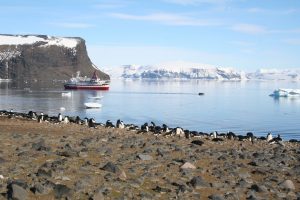
 Ukraina whose presence in Antarctica is dated 1995-1996, has followed the 6Ø ATS (AntarcticTreaty Signature) celebration, by putting a Special Event Station on the air.
EM6ØKTS is active from Rivne, Ukraine, since July 1st and will continue the activity till December 31st, 2021.
QRV on all HF Bands, CW, SSB and Digi..
TNX UT1KY Pavlo Tarasovych
QSL for EM6ØKTS goes via IK2DUW direct, ClubLog, HRDLOG.
IK2DUW:
Antonello Passarella, Via M. Gioia, 6, 20812 Limbiate, MB, Italy.
On July 3, 1992, President of Ukraine, Leonid Kravchuk issued a decree on Ukraine’s participation in Antarctic research. In August 1992, the Verkhovna Rada approved the documents on Ukraine’s accession to the Antarctic Treaty, and on October 26, 1993, the Center for Antarctic Studies (later the Ukrainian Antarctic Center) was established, headed by Petro Gozhyk.
On July 20, 1995, in London, Ambassador of Ukraine Serhiy V. Komisarenko signed an intergovernmental agreement, and Petro Gozhyk, Director of the CAD, signed a Memorandum between the CAD and the BAS on the transfer of the Faraday Antarctic Station to Ukraine no later than March 31, 1996.
On February 6, 1996, at 6:45 p.m., a yellow and blue flag was solemnly raised above Vernadsky Station (WAP referenced as UKR-Ø1).
Stations from different Countries are joining the 6Øth Anniversary of the Antarctic Treaty Signature. Some of them are already on air, others are going to come from October 1st till December31st
L’Ukraine dont la présence en Antarctique date de 1995-1996, a fait suite à la célébration du 6Ø ATS (AntarcticTreaty Signature), en organisant un événement spécial
Station en ondes.
EM6ØKTS est actif depuis Rivne, en Ukraine, depuis le 1er juilleter et continuera l’activité jusqu’au 31 décembreer sup>, 2021.
QRV sur toutes les bandes HF, CW, SSB et Digi..
TNX UT1KY Pavlo Tarasovych
QSL pour EM6ØKTS passe par IK2DUW direct, ClubLog, HRDLOG.
IK2DUW :
Antonello Passarella, Via M. Gioia, 6, 20812 Limbiate, MB, Italie.
Le 3 juillet 1992, le président de l’Ukraine, Leonid Kravchuk a publié un décret sur la participation de l’Ukraine à la recherche en Antarctique. En août 1992, la Verkhovna
Rada a approuvé les documents sur l’adhésion de l’Ukraine au Traité sur l’Antarctique, et le 26 octobre 1993, le Centre d’études antarctiques (plus tard le Centre ukrainien de l’Antarctique) a été
établi, dirigé par Petro Gozhyk.
Le 20 juillet 1995, à Londres, l’ambassadeur d’Ukraine Serhiy V. Komisarenko a signé un accord intergouvernemental, et Petro Gozhyk,
Directeur du CAD, a signé un mémorandum entre le CAD et le BAS sur le transfert de la station antarctique Faraday vers l’Ukraine au plus tard le 31 mars.
1996.
Le 6 février 1996, à 18h45, un drapeau jaune et bleu est hissé solennellement au-dessus Vernadsky Station
(WAP référencé comme UKR-Ø1).
Des stations de différents pays se joignent au 6Øème Anniversaire de la signature du Traité sur l’Antarctique. Certains d’entre eux sont déjà diffusés, d’autres vont
venez du 1ereroctobre au 31er décembre
Info de la Source Publié * ICI

 This is the second time




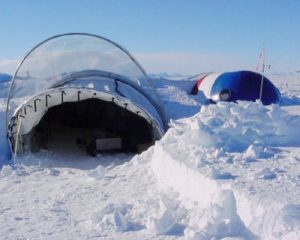
 The Unión Glacier, located at 79º 46’ South, 83º 24’ West, is a large glacier converted since 2014 into the Base Camp.
 In 2013 during the 68th Chilean Antarctic Campaign (ECA 50), the Polar Stations Arturo Parodi Alister (WAP CHL-14) –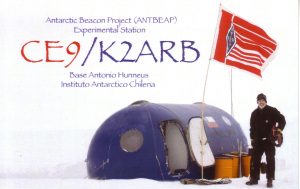

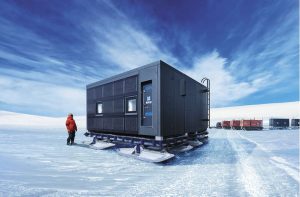 Japan will soon begin working toward construction of a new Antarctic base to continue with research into climate change over the past 1 million years.

 Asuka Station, located at 71°31’29’’South, 24°07’50’’East, altitude: 980.3mts was established in March, 1985 in Dronning Maud Land, 670 km
 Ice is thick
 Now climate change is undermining that success story. About 90% of the world’s surface fresh water is locked up in the Antarctic Ice Sheet and, as the planet heats up, glaciers whose collapse would deluge coastal cities from New York to Jakarta are melting and growing less stable.


 The Antarctic Treaty System (ATS) was entered into force in 1961. So this year it’s the 60th Anniversary.